 Edge of the World Riyadh Tours
What to Wear and Pack for the Edge of the World, Riyadh
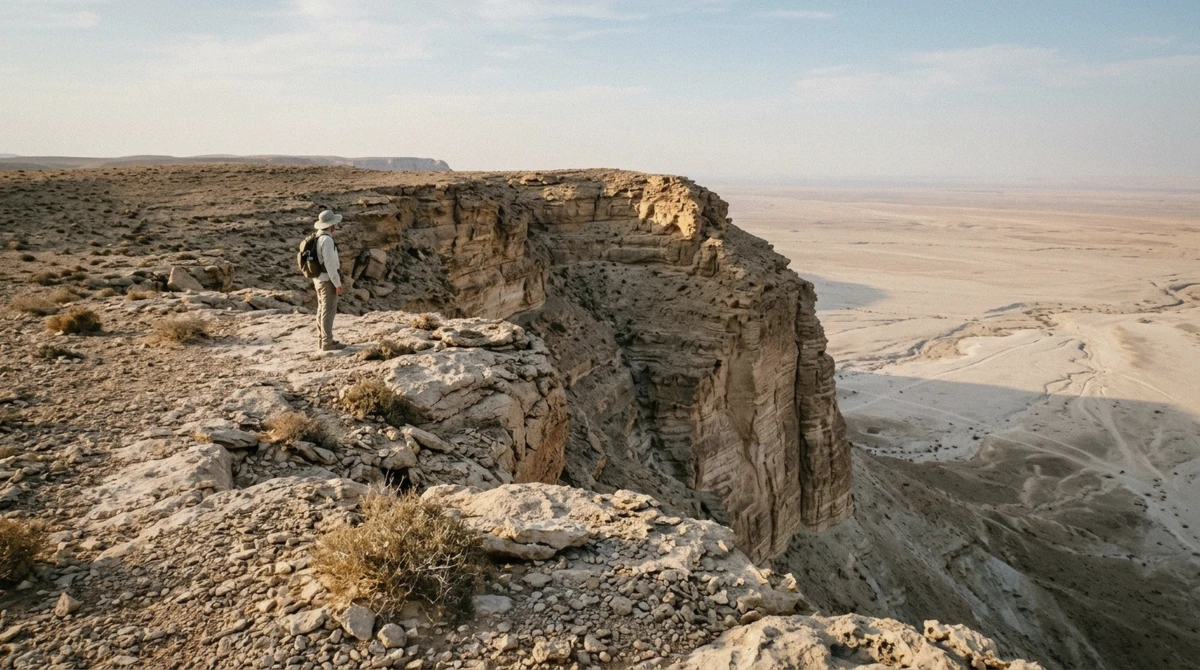
What to wear at the Edge of the World comes down to two things: Saudi modesty norms, which are simpler than most visitors expect, and a clifftop that has no shade by day and loses its heat fast after sunset. What to wear to the Edge of the World near Riyadh comes down to two rules: modest and grippy. Tours provide the vehicle, the guide and often snacks, so the packing list left on you is short: the right shoes, a layer for after dark, and sun protection for a viewpoint with no shade at all. The desert temperature swings hard between the afternoon on the rim and the drive home, so this guide splits into what to wear, what to bring, what the tours already give you, and what to leave in the hotel room.
Quick answer
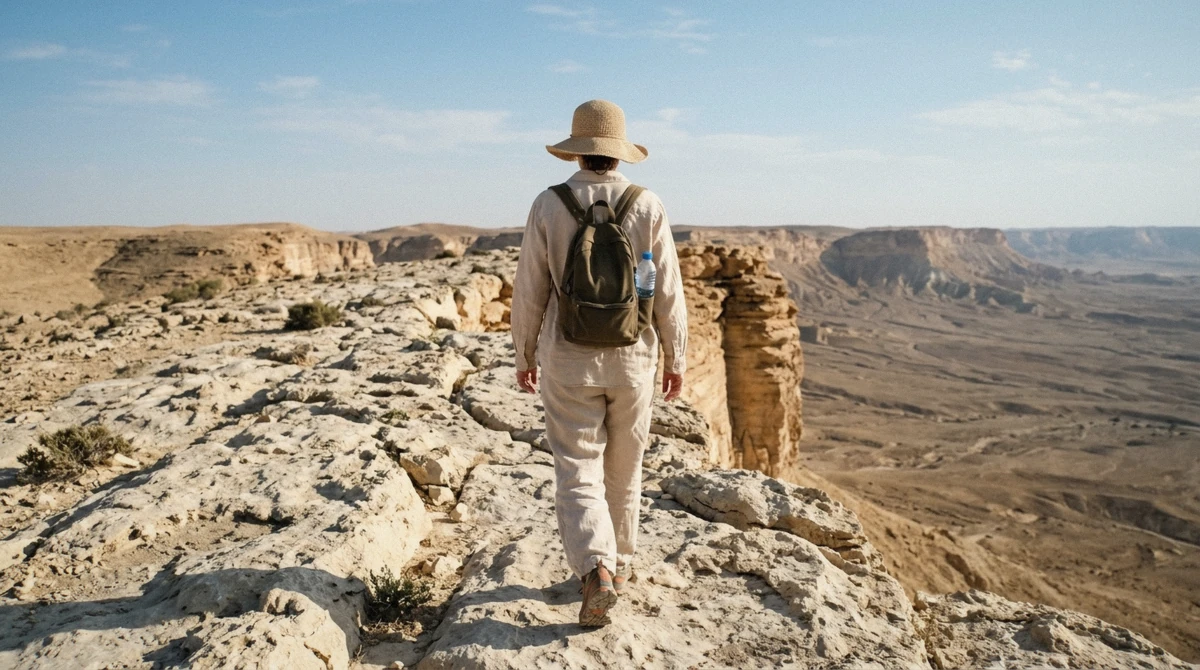
Tours provide the vehicle, the guide and often snacks or Arabic coffee, so nothing about gear needs sourcing before you leave the hotel. Wear loose clothing that covers your shoulders, upper arms and knees, and trainers or hiking shoes with real grip, never sandals. Bring a warm layer for after sunset, when the desert can drop from 20°C (68°F) to 8°C (46°F) in a few hours, plus sunscreen, water and cash.
Key takeaways
- Tours supply the 4x4, the driver and usually snacks or drinks: browse the Edge of the World tour listings
- What's on you: modest clothing, grippy shoes, a layer for after dark and sun protection
- Don't wear sandals or flip-flops on the rim rock, they cannot grip the uneven ledges
- Nights at the cliff sit near 8°C (46°F) even after a 20°C (68°F) afternoon
- Footwear answer in one line: trainers or hiking shoes, closed-toe, with tread
- Winter (October to March) needs a real layer after dark; summer needs sun cover more than warmth. Full season breakdown
What to Wear: the Dress Code in Plain Terms
Saudi Arabia's dress rules are simpler than they used to be, but modest dress still applies to everyone, tourist or not.
The general rule
Dress modestly: loose clothing that covers shoulders, upper arms and knees. That rule applies across public life in Riyadh, not only at the cliff, and it is worth packing for before the trip rather than working out on the day. Fabric matters more than cut. Linen and light cotton breathe in the afternoon heat and still cover enough skin to be comfortable in the desert wind once the sun drops.
What has changed is the level of enforcement. Guides describe walking groups of mixed nationalities through the same modest-dress guidance regardless of gender, and nobody is checking hemlines at the gate, because there is no gate. The standard is social, not policed, which is exactly why it is easy for a first-time visitor to either overdress out of nervousness or underdress out of not knowing.
What Women Wear
Women are no longer required to wear an abaya or cover their hair in Saudi Arabia, including on a desert tour. Most women on these trips wear loose trousers or a long, flowing skirt with a top that covers the shoulders, sometimes with a light scarf carried rather than worn, useful against wind and dust on the drive rather than for any dress requirement. A fitted T-shirt with jeans works too, as long as the shoulders and knees stay covered.
What doesn't work: shorts, vest tops, or anything sheer. It isn't about a specific garment being banned outright, it's that the general modesty standard, shoulders to knees, rules them out. Bring a light long-sleeved layer even if the afternoon plan is short sleeves, because the temperature drop after sunset is real and abrupt.
What Men Wear
Long trousers are the norm. Shorts are not typical in public in Riyadh, and while nobody will turn a man away at a desert tour meeting point for wearing them, most operators and most other travellers on the trip will be in trousers, and thin, breathable ones handle the heat fine. A T-shirt or a short-sleeved shirt is standard; a collared shirt is not required.
The practical failure point for men is footwear, not clothing. A man in the right trousers and the wrong shoes, flip-flops, canvas slip-ons with no tread, will struggle more on the rim than a man in shorts and proper hiking shoes, though neither look is ideal for the reasons above.
Footwear
Footwear is where people get this wrong. The ground at the viewpoints is rough, uneven rock with loose stones and short scrambles between vantage points, and the short climbs need actual grip.
Sneakers or trainers with tread are fine for the walking distances involved; this is not a technical hike, it is an uneven surface. Hiking shoes are the safer upgrade if you already own a pair, particularly for the sunset trips where the last stretch is walked in fading light. Sandals with a secured strap can carry you across the vehicle and the fuel-station stop but are not adequate on the rim itself. Flip-flops and any open, unsecured sandal are not okay: the risk is a lost sandal on loose rock or a cut foot on a ledge with no rail behind it. Barefoot is never appropriate here; unlike a soft-sand beach entry, this is sedimentary limestone that breaks and scatters underfoot.
What to Wear by Color
Color choice on a desert trip is mostly about heat and visibility, not fashion.
The color-guide table
None of the operators here enforce a color rule, and camouflage-pattern clothing carries no special civilian restriction in Saudi Arabia the way it does in some countries, so it isn't a hard no, just not the most practical choice for a desert walk.
| Color | Good? | Why |
|---|---|---|
| White or light neutrals | Good | Reflects heat during the afternoon drive and photo stops before sunset |
| Black | Situational | Absorbs heat in direct sun, but fine once the sun is down and the group is out for stargazing |
| Earth tones (tan, khaki, olive) | Good | Blends with the rock and sand, and hides dust from the unpaved final stretch |
| Bright or neon | Good for photos, optional otherwise | Helps you stand out in group photos on the rim; no safety reason it's required here |
| Camouflage pattern | Not restricted, but skip it | No civilian ban in Saudi Arabia, it just reads oddly next to a mostly earth-toned, casual group |
| Cotton | Poor if you'll sweat through it | Stays damp once you've been walking in the heat, then goes cold fast after sunset |
| Quick-dry synthetic | Good | Dries fast in the dry desert air and layers better under a warm top once the temperature drops |
What to Bring
The list below covers what actually gets used on a real Edge of the World afternoon, drawn from what guides consistently ask travellers to carry.
The checklist
Eight to twelve items, every one earning its place in a small bag rather than a full pack.
- Trainers or hiking shoes with grip, worn not packed
- A warm layer, packs small but matters after sunset
- High-SPF sunscreen, there is no shade to hide from the sun
- Sunglasses, the plateau glare is sharp even late in the day
- A hat with some kind of strap, the wind picks up on the rim
- More water than you think you'll drink, tours don't always cover a full afternoon's worth
- A power bank, cold and camera use both drain a phone fast
- Cash, small notes, for the fuel-station stop and tipping the guide
- A flashlight, only if a bat cave stop is on your itinerary
- Snacks, if your tour doesn't include dinner and you'll be out past 20:00
- A light scarf or buff, useful against dust on the unpaved final stretch
- Your own dietary note in writing, if you have one, to hand the guide directly
What the Tour Provides and What Is on You
Reading the actual listings side by side clears up most of the guesswork about who supplies what.
The provide-vs-bring table
Coverage varies by operator, and dinner is the biggest swing item: included on some trips, a paid add-on on others, absent entirely on the rest.
| Item | Usually Provided | Bring Your Own | Notes |
|---|---|---|---|
| Transport | Yes | No | Every listing includes the 4x4 and driver; that's the whole point of booking one |
| Water | Often | Bring extra anyway | Snacks and water included on the sunset, camel farm and stargazing 4x4 tour; bring more than the included amount |
| Snacks | Sometimes | Yes if not stated | Included on the sunset, camel farm and stargazing 4x4 tour and the guided Edge of the World hike from Riyadh; not listed on the sunset 4x4 trip with the gazelle reserve, the Edge of the World and gazelle sanctuary off-road tour or the bat cave, camel ride and desert dinner trip |
| Dinner | Only on one listing | Yes otherwise | Included on the bat cave and dinner trip; a paid extra around €35 on the sunset camel farm and stargazing tour; absent elsewhere |
| Arabic coffee or tea | On most sunset trips | No | Served at the vehicles or the picnic on the sunset 4x4 trip with the gazelle reserve and the Edge of the World and gazelle sanctuary off-road tour |
| Footwear | No | Yes | No operator supplies shoes; grip is entirely on you |
| Sun protection | No | Yes | Sunscreen, hat and sunglasses are never included, and there is no shade anywhere on the clifftop |
| Flashlight | No, even on the cave itinerary | Yes | The bat cave trip asks you to bring your own; no lighting is installed |
| Warm layer | No | Yes | Every itinerary runs past sunset; nobody hands out jackets |
| Guide and route knowledge | Yes | No | The actual value of booking rather than driving yourself |
What to Leave Behind
A short list of things that either won't be used, won't be allowed, or will actively slow you down.
What not to wear or bring
Skip heels, flip-flops or any sandal without a back strap, the ground punishes them within the first ten minutes. Skip cotton as an only layer, it soaks with sweat on the walk and then chills you once the temperature drops. Skip anything sheer or sleeveless as your only top, it breaks the shoulders-to-knees standard that applies across Riyadh, not only at the site.
Leave valuable jewelry at the hotel, there's no reason to risk losing it on loose rock or a dusty vehicle floor. Don't bring glass bottles for the drive, plastic or metal is what every operator expects. And skip the idea of bringing your own alcohol: Saudi Arabia is a dry country, and no desert dinner on any of these itineraries serves it. Drinks are water, soft drinks, tea and Arabic coffee, full stop.
Packing by Season
The temperature swing between the comfortable months and the hot months changes what actually goes in the bag, not just how much of it.
October to March: the comfortable window
Daytime on the escarpment sits roughly 18 to 25°C (64 to 77°F), the season most tours run in. Layer for the evening: a T-shirt or light long sleeve for the drive out, a jacket or fleece for the walk once the sun is down. December and January nights near the cliff sit around 8°C (46°F), cold enough that a single light layer isn't quite enough after dark. See the month-by-month numbers on the best-time guide.
April: the hinge month
Daytime highs climb toward 33°C (91°F) while the trip is still comfortable if you're prepared for direct sun. Sunscreen and a hat matter more here than the evening layer, since the afternoon heat, not the night cold, is the bigger factor this month.
May to September: the hot season
Daytime passes 40°C (104°F) with no shade anywhere on site. Loose, breathable, light-colored clothing becomes less optional and more essential; sun protection stops being a nice-to-have and becomes the main packing priority. A warm evening layer is barely needed, nights stay warmer through this stretch, but water and sun cover carry double the weight they do in winter.
Dressing for After Dark
Sunset is when most of these tours reach the cliff, and the light shift changes what you need on your back within an hour.
The peel-off formula
Dress for the 17:00 walk on the rim, then plan to add a layer by 19:00. The pattern repeats across nearly every operator's itinerary: photographs and walking in the last of the daylight, then tea, dinner or stargazing once it's dark, by which point the temperature has already started its fast drop. Pack the extra layer in a small bag rather than wearing it from the start, the afternoon heat on the drive out makes a jacket miserable before you need it.
If your trip includes stargazing, plan for standing still for a stretch once the desert sky properly opens up, which is colder than the walking portion. A hat you can pull down and gloves aren't overkill in December or January.
What to Wear: Common Questions
Do women have to wear an abaya at the Edge of the World?
No. Women are no longer required to wear an abaya or cover their hair anywhere in Saudi Arabia, including on this trip. The general modest-dress standard, shoulders, upper arms and knees covered, still applies to everyone.
Can tourists wear shorts in Riyadh?
Shorts aren't the norm in public in Riyadh and most men on these tours wear trousers instead. Nobody enforces it at the meeting point, but trousers fit the general modesty standard more comfortably and handle the evening temperature drop better.
Do I need water shoes at the Edge of the World?
No, this is a dry desert clifftop, not a water activity. What you need instead is closed-toe footwear with real tread for the uneven rock.
Is a jacket necessary?
Yes if your tour runs past sunset, which most do. The desert cools fast: a 20°C (68°F) afternoon can drop to near 8°C (46°F) by the time the group is out for stargazing.
Can I wear jeans?
You can, but they're not the best choice. Jeans don't breathe in the afternoon heat and take longer to feel comfortable again once you've been sweating on the walk. A lighter trouser fabric handles the same modesty requirement more comfortably.
Does the tour provide any gear?
Tours provide the vehicle, the guide and, on some listings, snacks, water or dinner. Nothing you wear or carry personally, shoes, sun protection, a warm layer, is supplied. See the provide-vs-bring table above for exactly what varies by listing.
Will my phone be safe from dust on the drive?
The final stretch is an unmarked, corrugated desert track, and dust gets into open bags easily. A closed daypack or a simple pouch for your phone is enough; nothing more technical is needed.
None of this requires a shopping trip. Most travellers already own trainers, a light long-sleeved top and a jacket that packs small, which covers the whole list once you add sunscreen and a hat. The only genuine mistake worth avoiding is footwear: sandals and flip-flops are the one item that turns an easy clifftop walk into an uncomfortable one.